The first dance is one of those wedding moments that can generate as much excitement as uncertainty: what song to choose, whether to choreograph a dance, when to start rehearsing, or how to keep nerves from ruining your enjoyment. The good news is that you don’t need to dance perfectly to create a special moment; you just need to prepare a few practical aspects and find a formula that works for you.
From choosing the music to trying on the dress, shoes, and venue, this guide covers the key points to consider when preparing your first dance without turning it into another chore. The goal is to arrive on your wedding day confident enough to forget about the steps and simply enjoy those precious moments together.
Choose a song that has meaning for you
The song you choose for your first dance will be forever linked to your wedding memories. That’s why, rather than searching for the song everyone expects to hear, it’s worth selecting a piece that has some connection to your story.
It could be a song you heard during a special trip, a song you always end up singing together, or simply a melody that makes you feel comfortable. It doesn’t necessarily have to be a ballad: the musical style should reflect who you are, not conform to a preconceived notion of what a first dance should be like.
Before deciding, listen to the entire song, not just the chorus. Pay attention to the lyrics, the length, the changes in rhythm, and the moment you want to end the dance. A song that moves you can work beautifully, but it should also allow you to move with a sense of ease and freedom.
How to choose the wedding dance song?
When you have several options, a simple way to decide is to try them out. Play each song, dance together for a couple of minutes, and see which one makes you feel less focused on what you’re doing. Comfort is usually a better criterion than spectacle.
You can also consider the rhythm and length. If you love a song but it’s too long, talk to the DJ or the band about using a shorter version or setting a specific end point. There’s no set duration: it’s better to leave everyone wanting more than to drag things out out of obligation.
- Meaning: Does it remind you of a special moment?
- Rhythm: Can you move comfortably with it?
- Duration: Does it maintain interest without dragging on?
- Lyrics: Does it fit with what you want to convey?
- Transition: Does it allow for a smooth link to the start of the party?
It doesn’t have to meet all these criteria. The final decision should be simple: when it starts playing, you should feel like dancing together.
Ways to make your wedding dance your own
The waltz remains a possibility, but it’s long since ceased to be the only one. The first dance can take as many forms as there are couples: from a few minutes embracing and swaying to the rhythm to a choreographed routine prepared weeks in advance. There’s no single right way to start the dance.
You can begin with a slow song and surprise your partner with a change of music, choose salsa, bachata, swing, rock, or any style you both enjoy. You can also revive a dance connected to your family or hometown, or have family and friends join in during the final part.
A simple and natural dance
This is the right option if you don’t feel like memorizing steps. You can learn a comfortable position, a few steps, and one or two simple turns. With very few resources, it’s possible to achieve a fluid dance that doesn’t look overly rehearsed.
A prepared choreography
If you enjoy dancing or want to make this moment a little surprise, you can prepare a complete routine. In this case, it’s best to adjust the difficulty to your experience, because a simple choreography performed with confidence usually works better than a complicated one that forces you to constantly think about the next step.
A song change to kick off the party
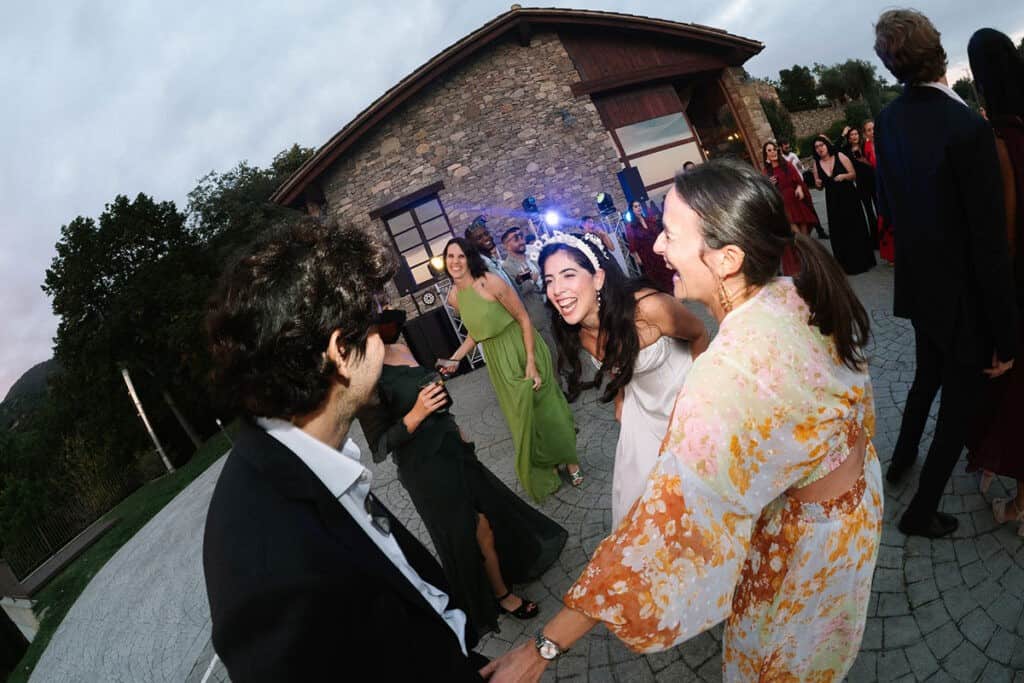
Another option is to start with a few more intimate minutes and then switch to an energetic song. At that point, the guests can join in and the party can begin. This approach helps make the first dance a natural transition between the reception and the more festive part of the wedding.
Whatever you choose, try not to plan the dance solely to impress those watching. The best format will be one in which you can truly connect with each other and enjoy those moments together.
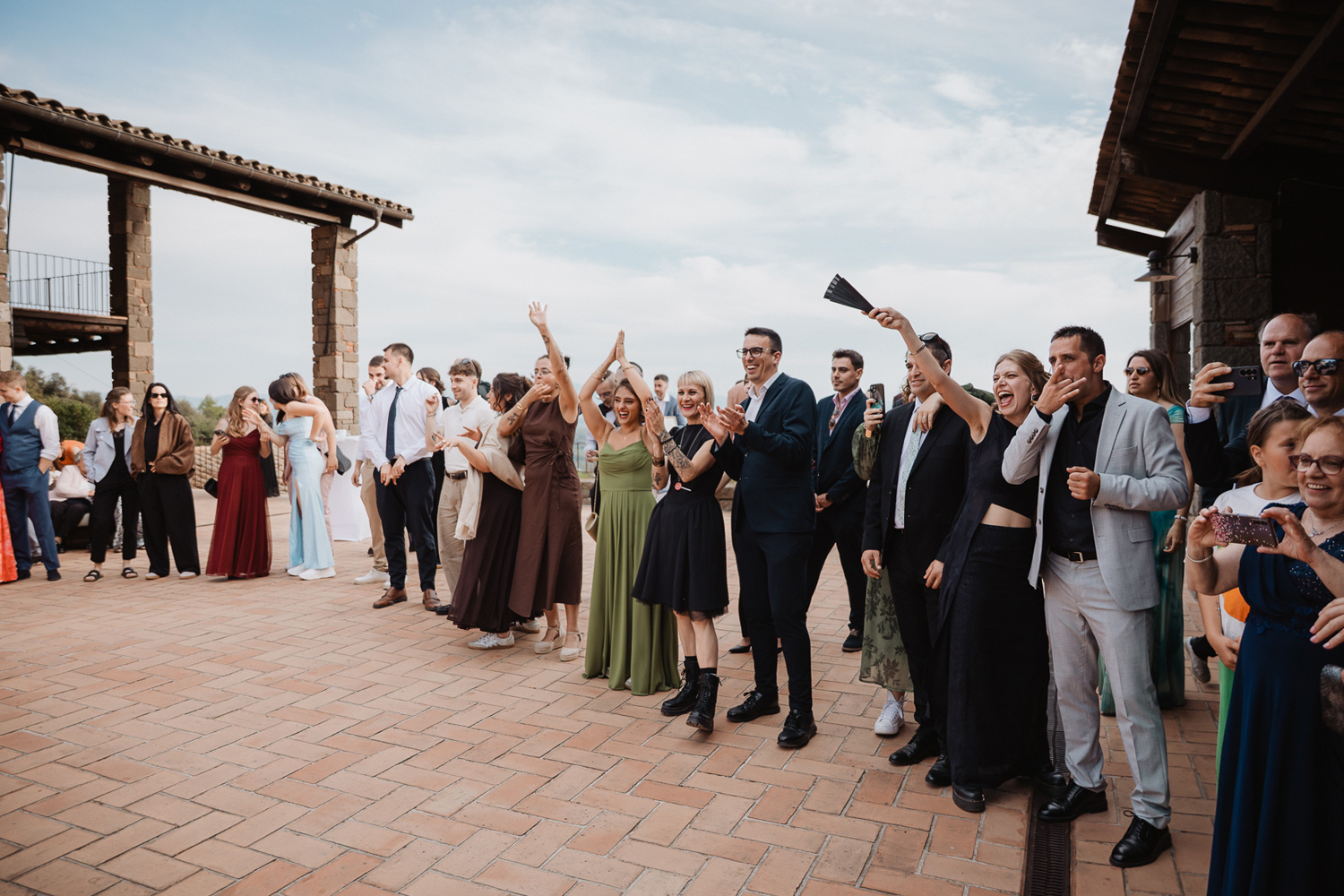
Do you need to prepare a choreographed dance for the wedding dance?
No. Choreography can provide a sense of security if you like the idea of having defined movements, but it’s not essential for the dance to work. Some couples enjoy learning a sequence more, while others feel much more comfortable improvising.
If you don’t dance regularly, a few classes can help you learn how to position yourselves, initiate movements, turn, or finish a song. The goal shouldn’t be to transform you into professional dancers, but rather to reduce the feeling of not knowing what to do when all eyes are on you.
If you do prepare choreography, leave some room for improvisation. A smile, a pause, or a movement different from what was planned won’t ruin the dance. In fact, spontaneous moments often make it feel more natural.
When is the best time to start preparing for the wedding dance?
There’s no need to start rehearsing the moment you set your wedding date. For most couples, a few months offers enough time to prepare at a relaxed pace, especially if the choreography isn’t too complex.
The most practical approach is to progress gradually. First, choose a song and style; then incorporate movements, and as the wedding approaches, practice with props similar to those you’ll use on the day. A sample plan might look like this:
- 3 or 4 months before: choose the song and decide if you want a free dance or a choreographed routine.
- 2 or 3 months before: start classes or rehearsals if you are going to prepare specific steps.
- 1 month prior: practice the entire sequence with the final version of the song.
- Final weeks: try on footwear and check how the dress and suit influence movement.
- Last days: do some review, avoiding turning rehearsals into a source of pressure.
Frequency matters more than long sessions. Practicing short bursts regularly helps internalize the movements and allows the dance to eventually become almost automatic.
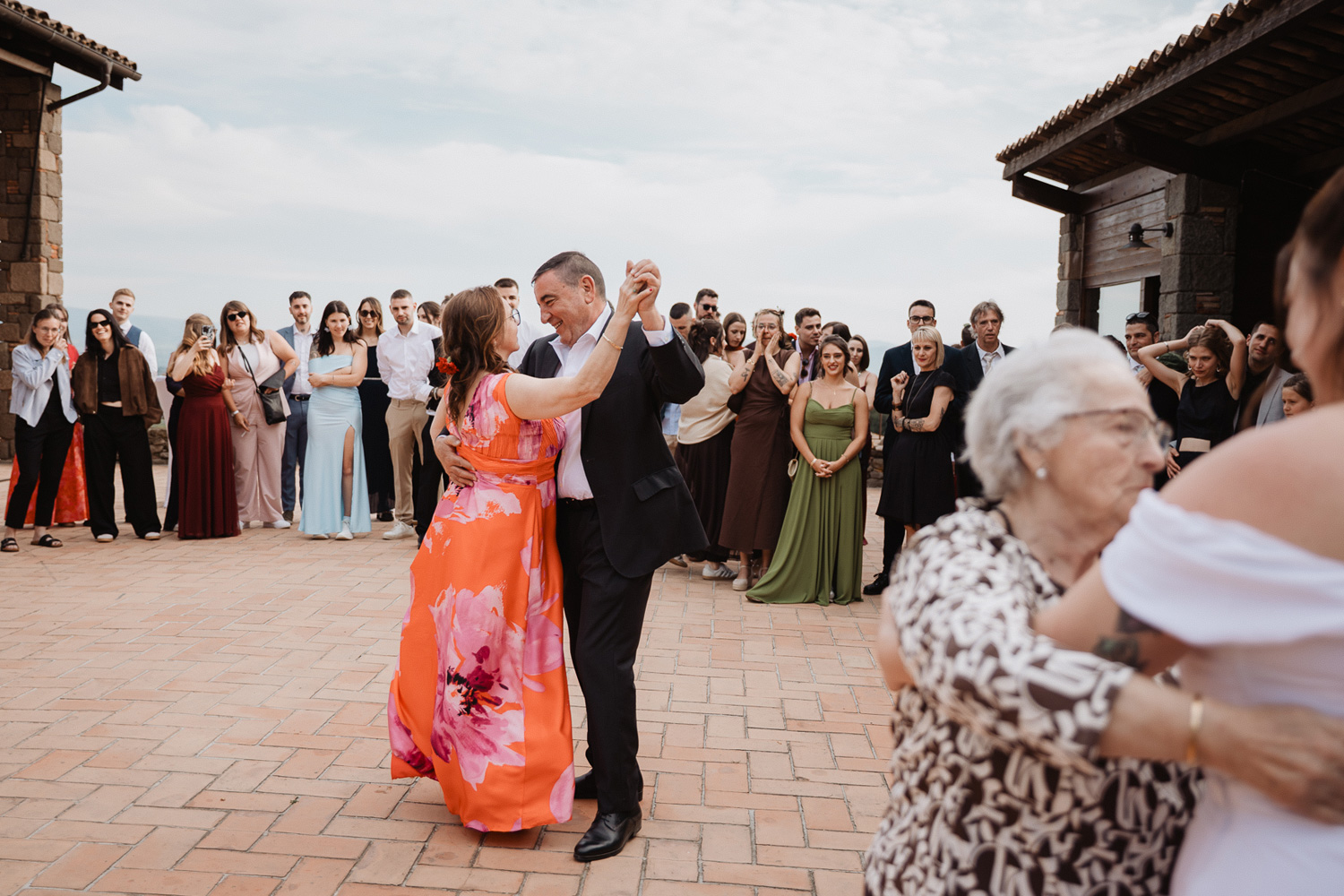
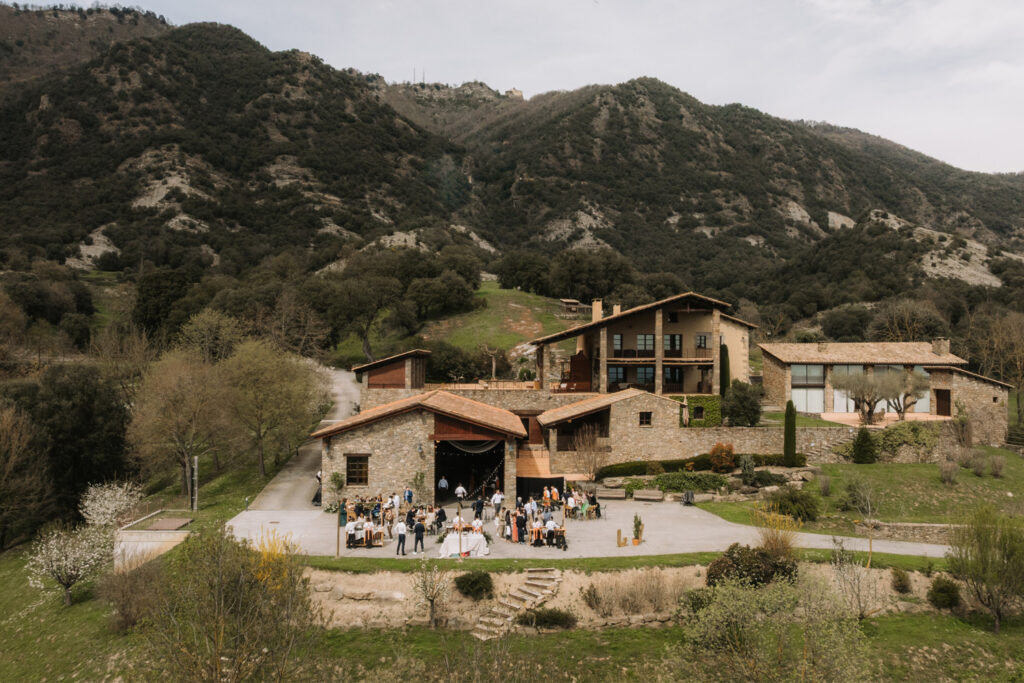
Organize your wedding dance so that everything goes perfectly in a dream farmhouse
Rehearse with the dress, the suit, and the shoes
A choreographed routine might work perfectly at home, but it can change completely when the wedding dress and shoes appear. A full skirt, a long train, or certain types of heels can restrict some steps. That’s why it’s a good idea to practice how you’ll actually move before the big day.
You don’t need to wear your final dress for every rehearsal. You can practice in a similar length or volume and save a real rehearsal for the final weeks. If the dress has a system for collecting the train, make sure it’s in place before you start dancing.
The same applies to shoes. Wearing new shoes for the first dance adds unnecessary difficulty, so wearing them beforehand for short periods will allow you to check if they’re comfortable. You can also prepare a second pair of shoes for the reception if you want to move more freely.
Adapt the steps to the space where you are going to dance
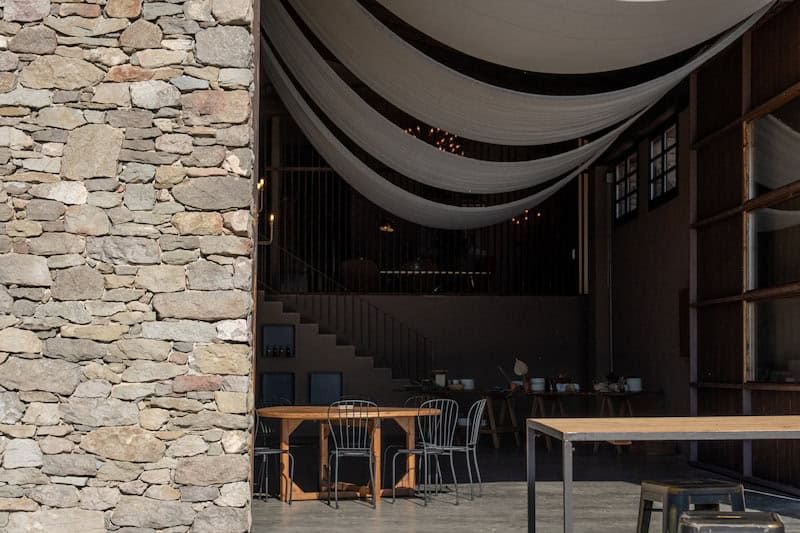
Not all dance floors have the same dimensions, flooring, or layout. A choreography practiced in a large hall may need adjustments if the actual space is smaller. Before finalizing the moves, it’s advisable to know exactly where the dance will take place.
Pay particular attention to the available space, any steps, uneven surfaces, furniture, and type of flooring. If you plan to perform wide turns or movements, these factors can significantly influence the choreography.
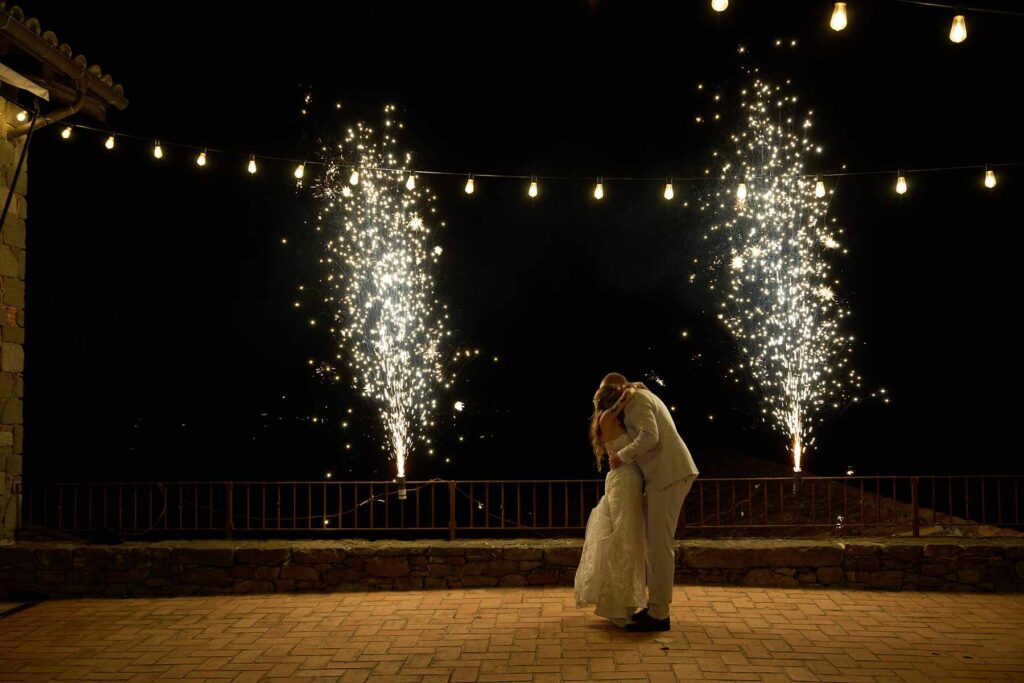
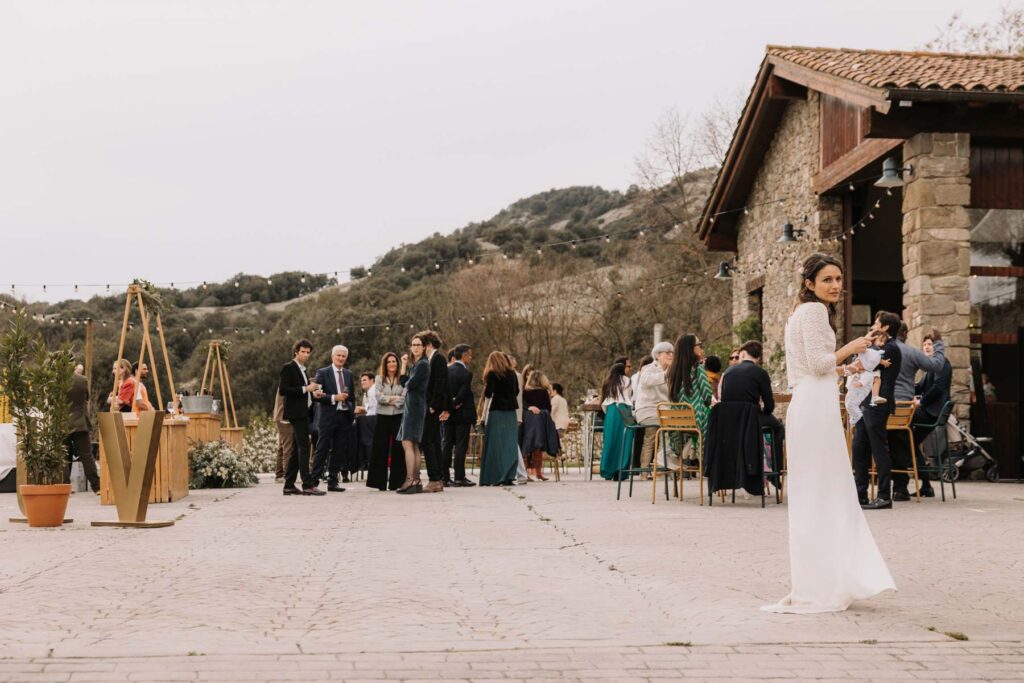
At our wedding venue, we have different spaces for each part of the celebration, allowing us to work with each couple to plan how to integrate the dancing and the beginning of the party into their chosen layout. Knowing the space beforehand provides a great deal of peace of mind when it’s time to dance.
Coordinate the first dance with the DJ, musicians, and photographers
A significant part of the preparation happens off the dance floor. The DJ or band needs to know which song will be played, which version they’ll use, and when it should start and end. If there will be a song change, a special entrance, or guests joining in at the end, it’s also important to have that information ready.
Provide the file or specify the exact version in advance. Two versions of the same song can have different intros or durations, which can throw off a choreography you’ve prepared based on a different recording.
It’s also helpful to inform the photography and video team about what’s happening. If they know there will be a specific turn, a change of pace, or a guest entrance, they can position themselves better without having to intervene. Good coordination allows you to simply dance.
How to control your nerves during the wedding dance
Even if you’ve rehearsed a lot, it’s normal to feel some tension right before you start. Suddenly, all eyes are on you, and movements that seemed automatic at home can feel different. At that moment, thinking less about the steps is usually more helpful than trying to control them all.
Look at each other instead of constantly searching for the guests. If you forget a move, keep the rhythm, catch up, and pick up where you left off when you can. Most of the people watching you don’t even know the choreography, so they’re unlikely to notice anything has changed.
- Take a breath before entering the track.
- Look at your partner, not at the ground.
- Don’t try to correct a mistake on the fly.
- Keep moving even if you forget a step.
- Remember that dancing is not a competition.
Además, es muy probable que dentro de unos años no recordéis si ejecutasteis correctamente cada giro. Sí recordaréis, en cambio, cómo os sentisteis durante esos primeros minutos juntos.
Besides, it’s very likely that in a few years you won’t remember if you executed every turn correctly. You will, however, remember how you felt during those first few minutes together.
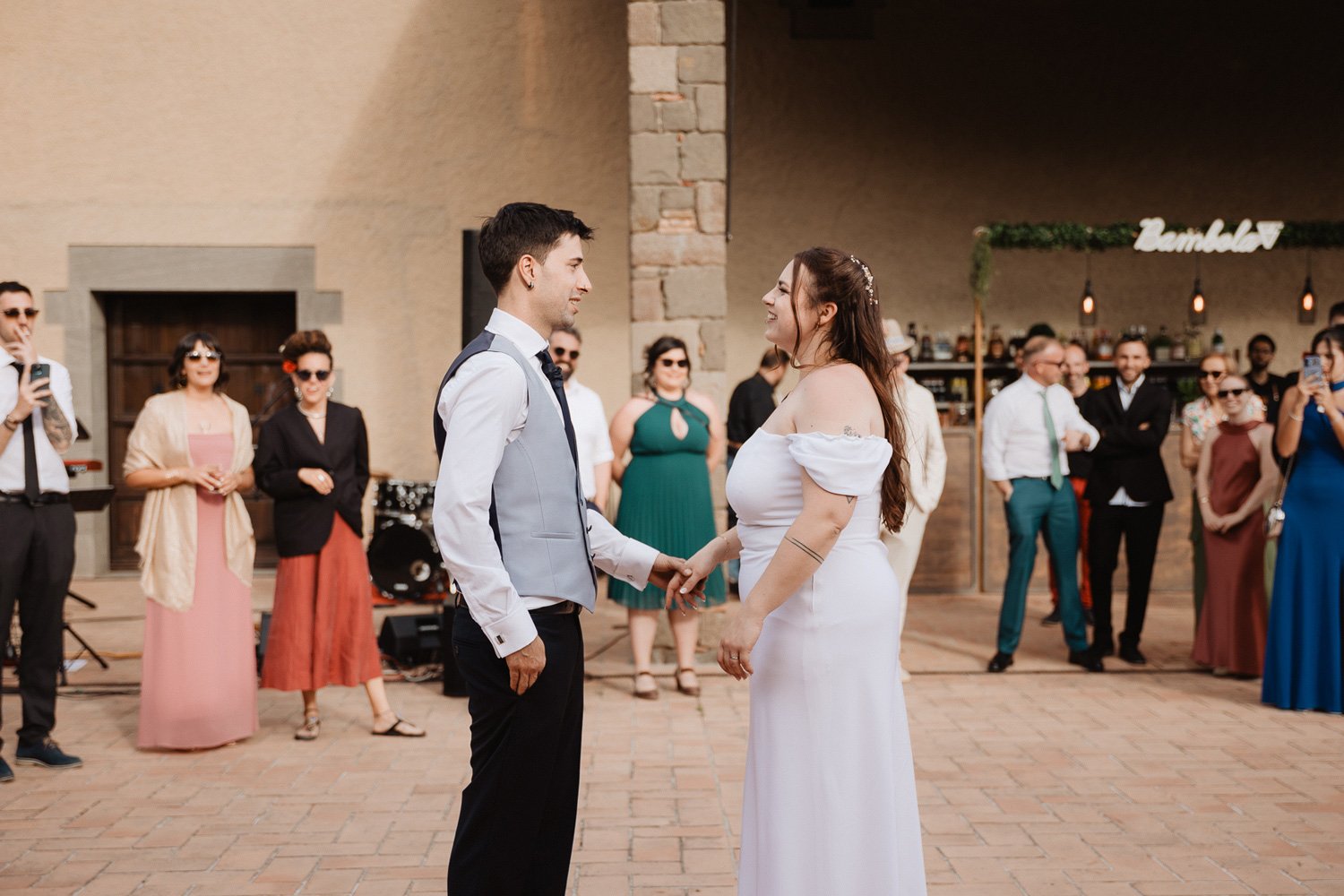
Checklist to prepare your wedding dance
As the wedding approaches, it’s easy to have many tasks going on at once. That’s why it’s helpful to focus the dance preparations on a few specific decisions and double-check that each one is resolved.
This table can serve as a guide for organizing rehearsals without adding more pressure to the preparations:
| Moment | What to prepare | What to prioritize |
|---|---|---|
| 3-4 months before | Choose song and style | That represents you |
| 2-3 months before | Start rehearsals or classes | Acceptable movements |
| 1 month before | Practice the entire song | Naturalness and confidence |
| Last weeks | Try on dress, suit and shoes | Comfort when moving |
| Before the wedding | Coordinate music and space | Avoid technical improvisations |
| Wedding day | Stop thinking about the steps | Enjoy the moment |
If you’ve prepared these points, you probably already have everything you need. There’s no need to add difficulty during the last few days: when that time comes, the most helpful thing is to rely on what you’ve rehearsed.
Common mistakes when preparing for the first dance
One of the most common mistakes is choosing a choreography based on how it will look rather than how you’ll feel performing it. When the movements are clearly beyond your skill level, the dance can end up creating more stress than excitement.
It’s also advisable to avoid starting too late if you want to prepare a complex sequence, constantly changing songs, or never rehearsing the dance in clothes and shoes similar to those you’ll wear to the wedding.
- Choosing a song simply because it’s trendy.
- Preparing too many difficult steps.
- Don’t always use the same version of the song.
- Forget the limitations of dress or space.
- Not notifying the DJ about music breaks or changes.
- Rehearsing in search of perfection instead of confidence.
The fewer things you have to consciously control during the dance, the easier it will be to enjoy it. Preparation should provide confidence, not turn the moment into a performance you have to get through.
Frequently Asked Questions about the wedding dance
When preparing for the first dance, couples often have very similar questions. Most have a simple solution because the rules of the wedding dance are much more flexible than they seem.
Here are some questions worth answering before rehearsals begin.
How long should the wedding dance last?
There’s no set duration. You can dance the entire song or agree with the DJ on a cut that includes your favorite part. The length should be comfortable for you and keep the party going.
Does it have to be a waltz?
No. You can choose any musical genre or combine several styles. The waltz remains a lovely option for those who enjoy tradition, but your first dance can take any form you like.
What do we do if neither of us knows how to dance?
You can learn some basic moves, attend a few classes, or simply move naturally to the music. Not knowing how to dance doesn’t prevent you from enjoying the moment, and a simple sequence is usually enough to gain confidence.
Can we invite family members halfway through the dance?
Yes. It’s a good way to reduce the time you spend dancing alone and to gradually open up the dance floor. You can ask the DJ to make the change at a specific point to give your guests a natural transition.
What happens if we make a mistake?
Keep dancing. If you forget a step, you can improvise for a few seconds and then resume the choreography. In practice, a small mistake usually goes completely unnoticed by those watching.
Working things out beforehand helps you arrive at the dance with a clear idea, but it’s also not a good idea to plan every second. Leaving room for spontaneity is part of the celebration.
A dance to enjoy, not to do perfectly
Prepare enough to build confidence: choose a song you both connect with, adapt the movements to your skill level, try on your outfits, familiarize yourself with the space, and coordinate the technical aspects. Then, when the moment arrives, try to forget all of that.
At Mas Redortra, we see dancing as an integral part of a celebration that should flow naturally. After the ceremony, the cocktail hour, and the banquet, it’s that moment when attention gradually shifts from being solely focused on the couple, and the party begins, shared with family and friends.
Because the best memory probably won’t be having executed every step exactly as planned. It will be the song starting to play, the important people around you, and the feeling of experiencing your wedding the way you had imagined.
Subscribe to our newsletter to receive all our wedding planning tips
You might also be interested in…