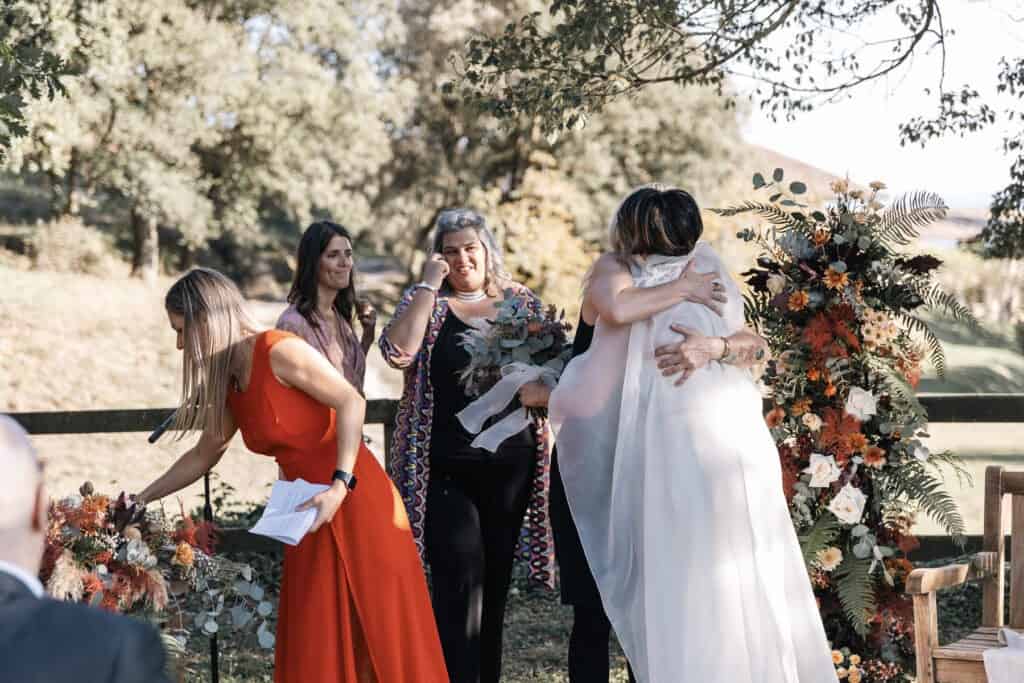
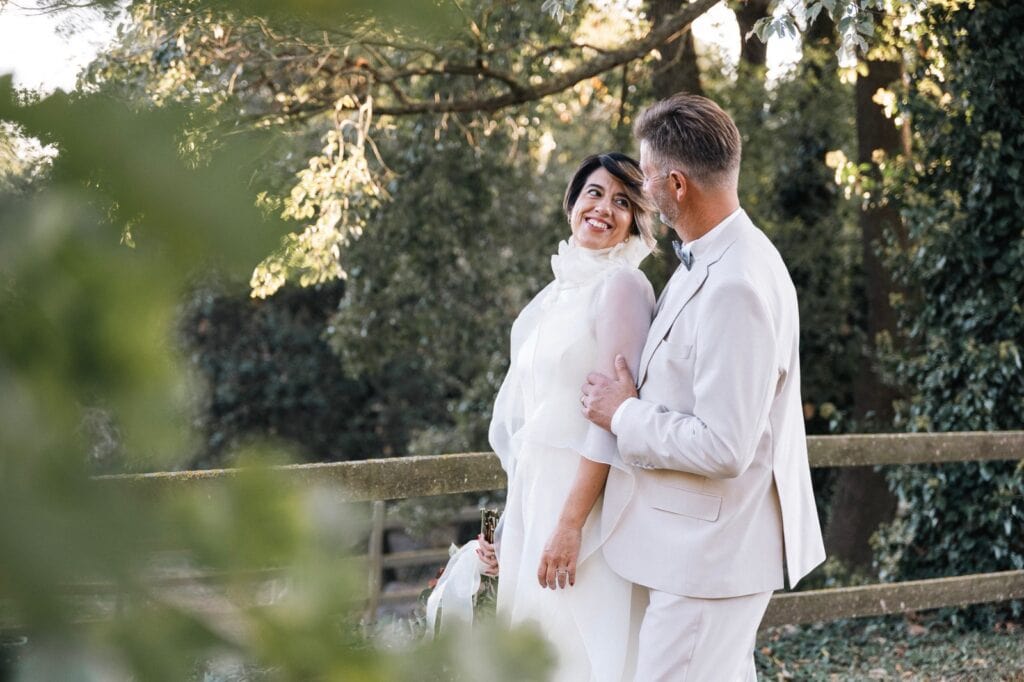
Organizing a civil ceremony is, above all, about deciding how you want to formalize your commitment in a way that resonates with you. Beyond the legal formalities and understanding what a civil wedding ceremony entails, it’s about creating a moment that reflects your vision of celebration: simple or elaborate, intimate or expansive, condensed into a few hours or enjoyed leisurely over an entire weekend.
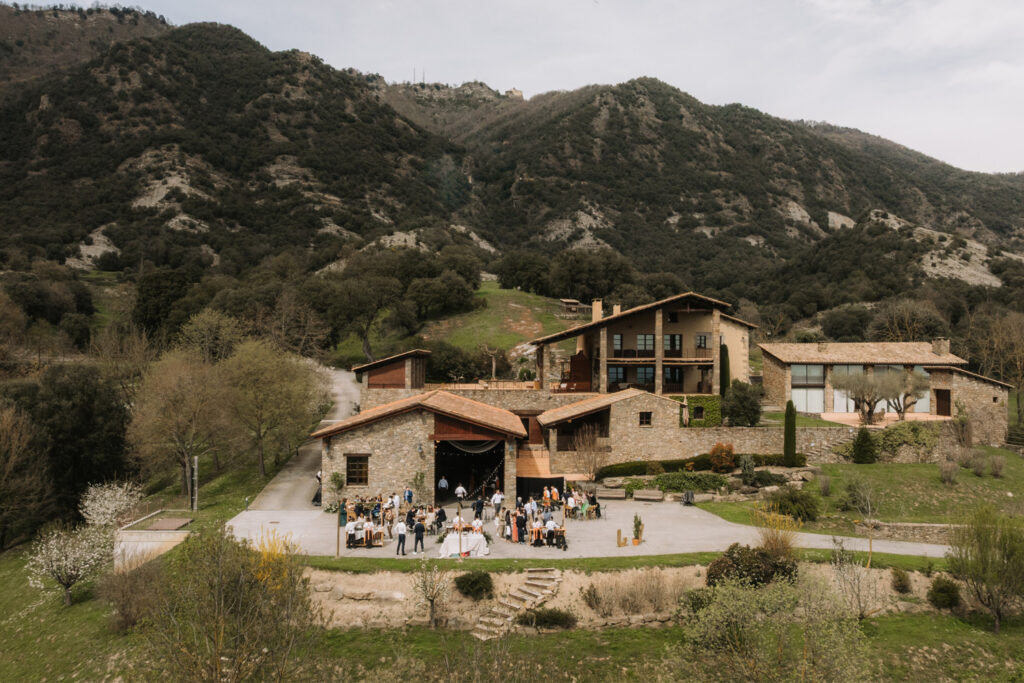
At Mas Redortra, we see that many couples who choose this type of wedding are looking for precisely that: naturalness, coherence, and an environment where the experience doesn’t feel rushed. Celebrating in a space surrounded by nature, a short distance from Barcelona, allows you to integrate the ceremony into a broader context, where the time and comfort of your guests are also part of the decision.
Understanding what a civil wedding ceremony is like today is the starting point. From there, the planning ceases to be a mere collection of tasks and becomes a structured process. Next, we’ll see step by step how to organize a civil ceremony so that the process is clear and the result is aligned with what you really want to experience.
What a civil wedding ceremony is like in practice
Before getting into the planning, it’s helpful to understand how this type of ceremony actually works. Many couples believe it’s a quick process with no room for personalization, but that depends on the chosen format.
It can be held at the town hall or a notary’s office, or you can complete the legal formalities beforehand and then plan a more personal ceremony at your chosen venue. In any case, there’s a basic structure that guides the process and should be followed to ensure everything runs smoothly.
Generally speaking, it includes:
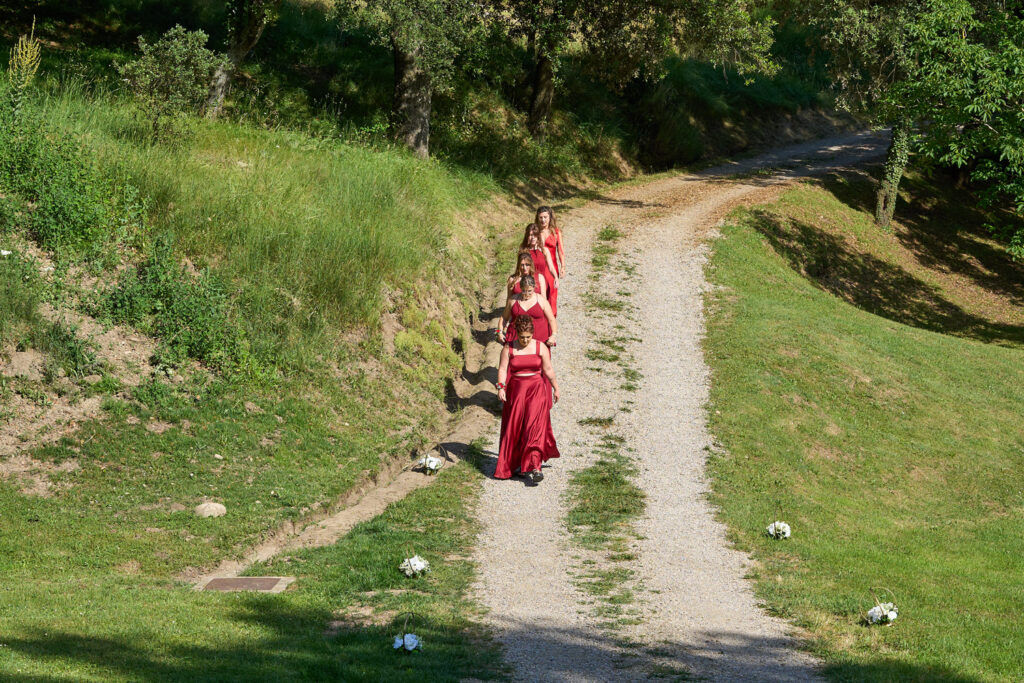
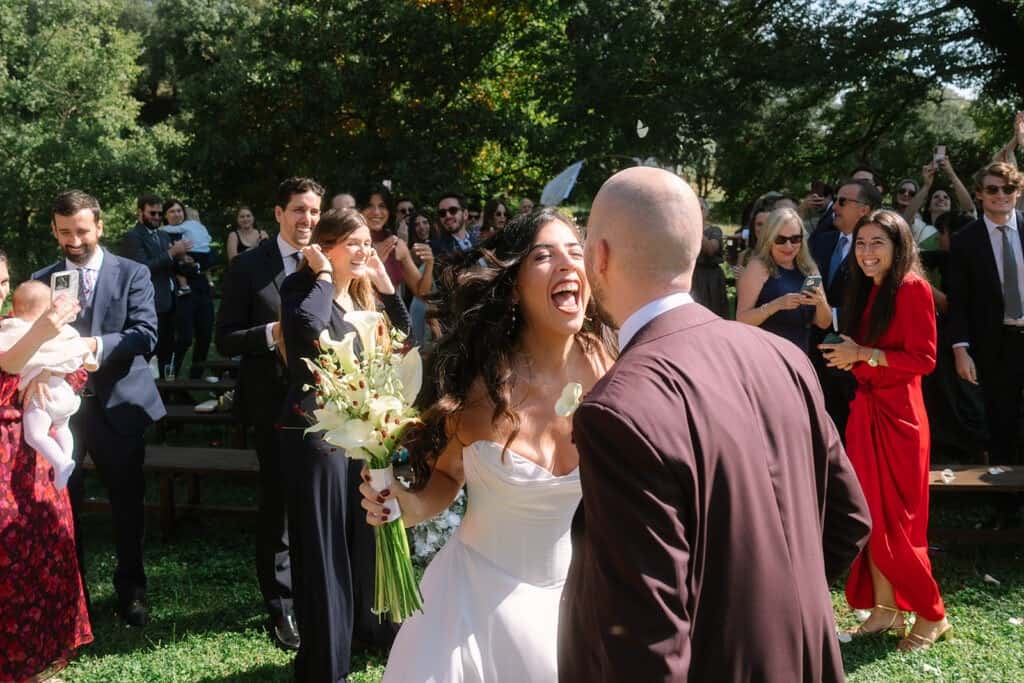
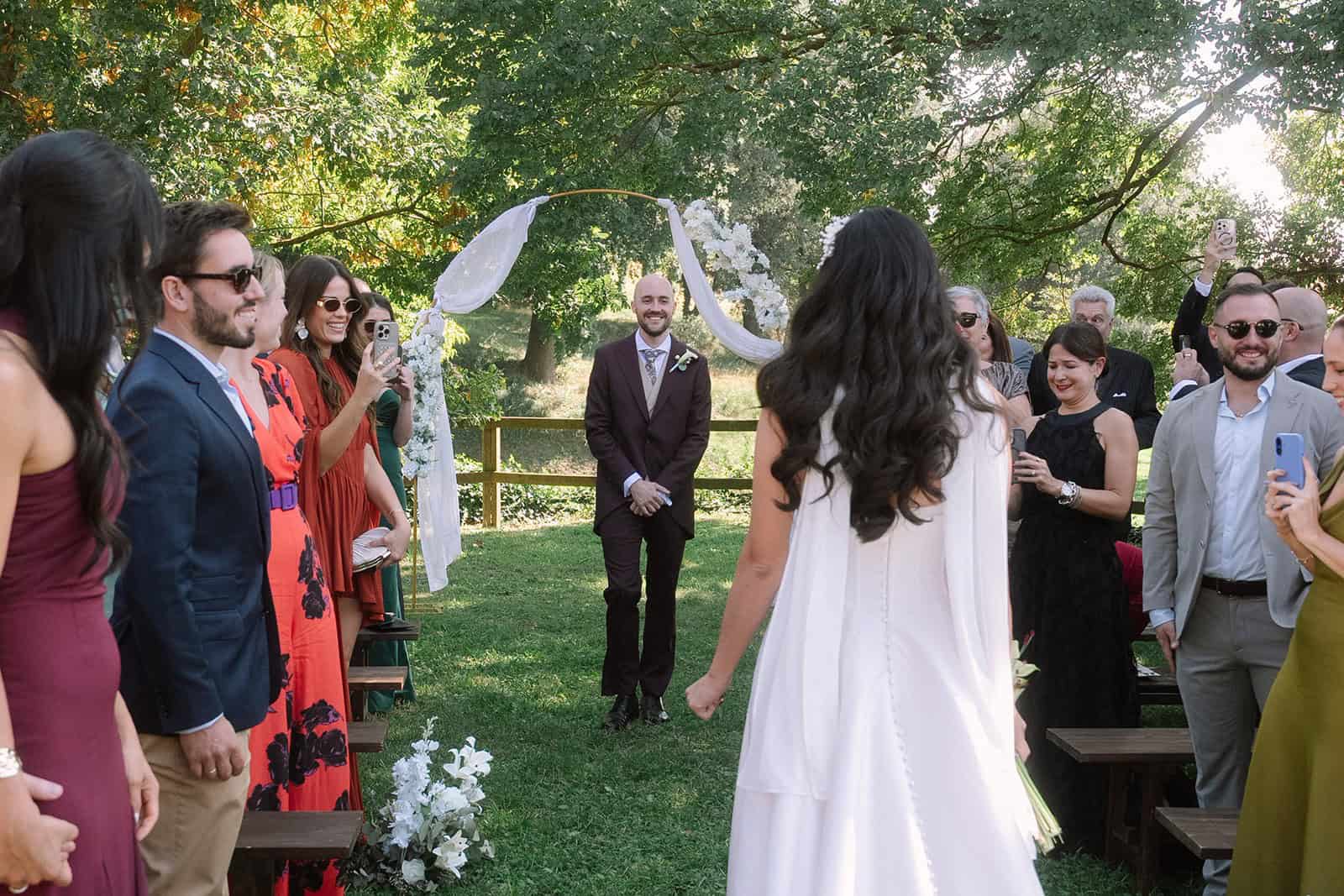
- Entrance: It marks the formal beginning and generates the first visual and emotional impact.
- Welcome: The officiant contextualizes the commitment and connects with the guests.
- Legal section: relevant reading and acceptance questions if it has legal validity.
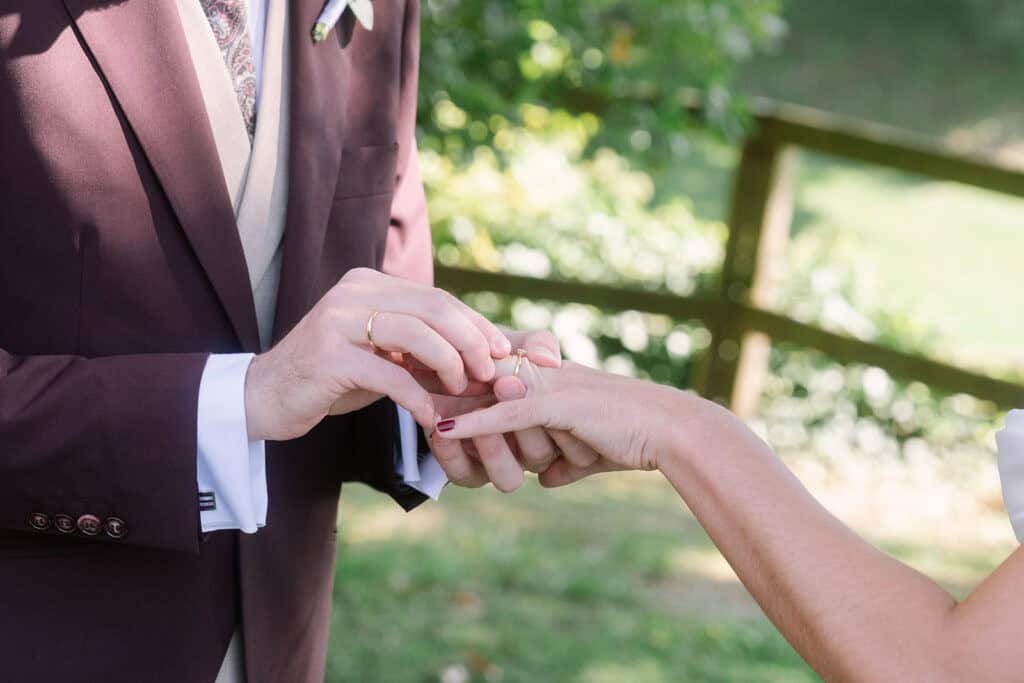
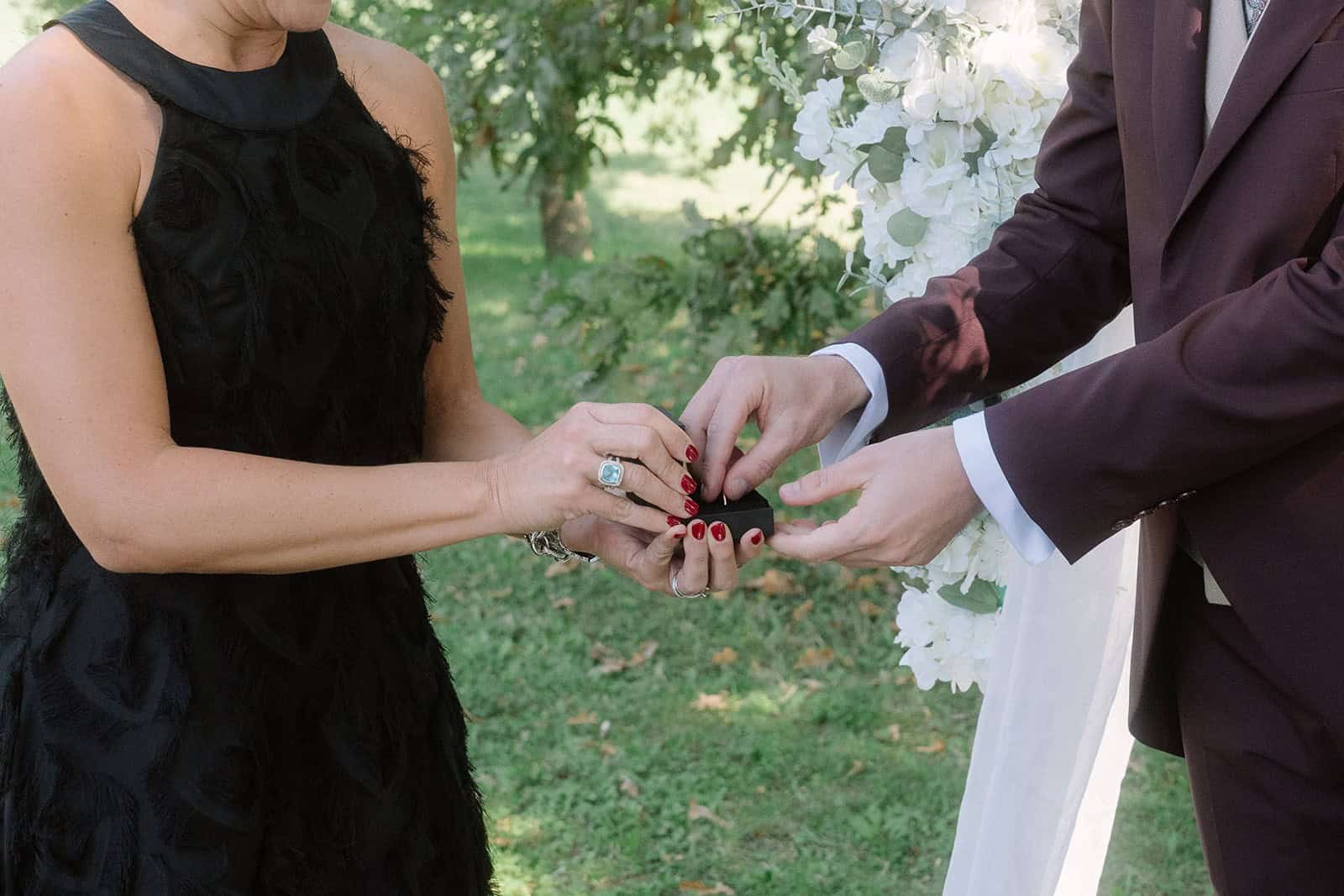
- Ring exchange: central symbolic gesture that focuses attention.
- Signature: formalization of marriage when appropriate.
- Closing: clear transition to the next moment of the day.
A duration of approximately 25 to 35 minutes is usually sufficient to maintain intensity without losing focus.
Define the framework before you start organizing
One of the most common mistakes when organizing a civil ceremony is starting with the details without having defined the overall framework. Without that foundation, every decision generates unnecessary doubts.
Before booking vendors or confirming a venue, it’s advisable to stop and answer some key questions. It’s not about having everything finalized, but about having a clear direction.
It’s helpful to specify:
- Format: legal, symbolic, or a combination of both, depending on your idea.
- Number of guests: it affects space, logistics and budget.
- General style: classic, natural, formal, intimate or minimalist.
- Pace of the event: concentrated workday or extended weekend experience.
- Estimated budget: a realistic range that allows for calm decision-making.
When this framework is defined, the organization ceases to be an accumulation of tasks and becomes a logical sequence.
The legal aspects and prior planning
Administrative management is usually not complex, but it does require planning. Starting the process well in advance prevents the schedule from affecting other decisions.
Furthermore, understanding the actual timelines allows you to announce a date with confidence and coordinate venues and suppliers without pressure.
At this point, it’s important to:
- Request an appointment in advance: especially during peak demand seasons.
- Review documentation: updated and complete certificates.
- Confirm official deadlines: before setting definitive dates.
- Appoint witnesses: ensuring availability and compliance with requirements.
Once this block is resolved, attention can be focused on the design of the act.
Subscribe to our newsletter
Receive practical advice and news about events in rural farmhouses.
Choosing the location with a global vision
The venue isn’t just a backdrop for photographs. It shapes the experience. The choice of setting influences the comfort of the guests, the smooth flow of the program, and the overall feel of the day.
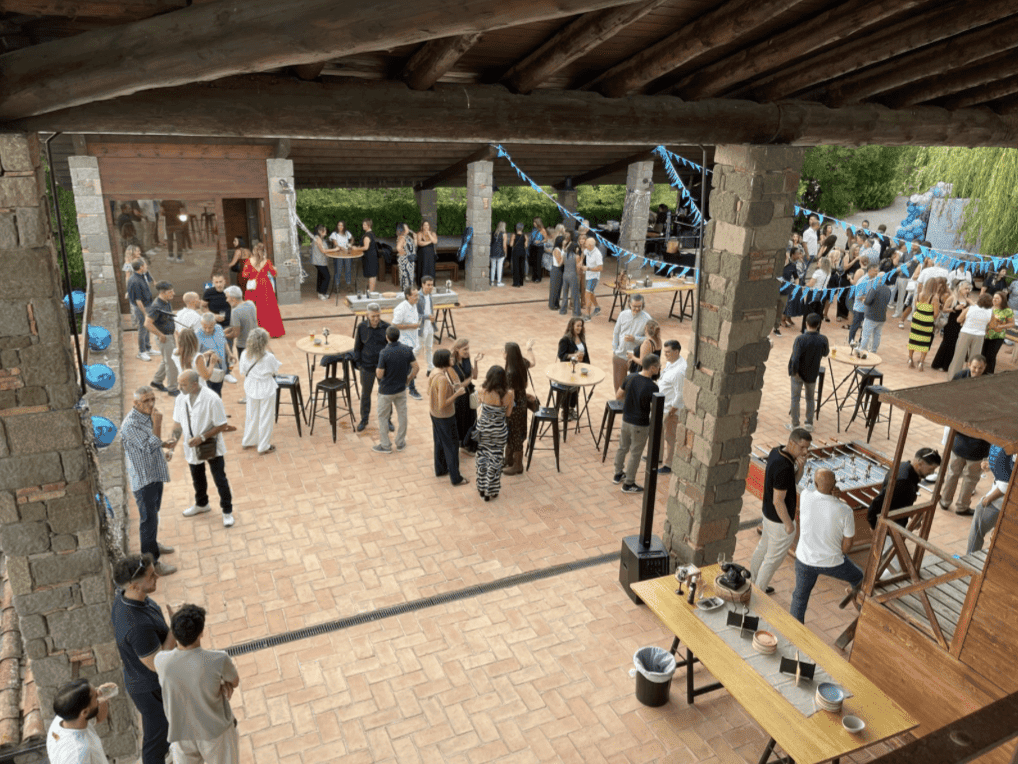
When looking to celebrate near Barcelona, many couples prioritize nature, privacy, and the possibility of combining the ceremony and reception in the same location. This continuity eliminates travel and creates a sense of cohesion.
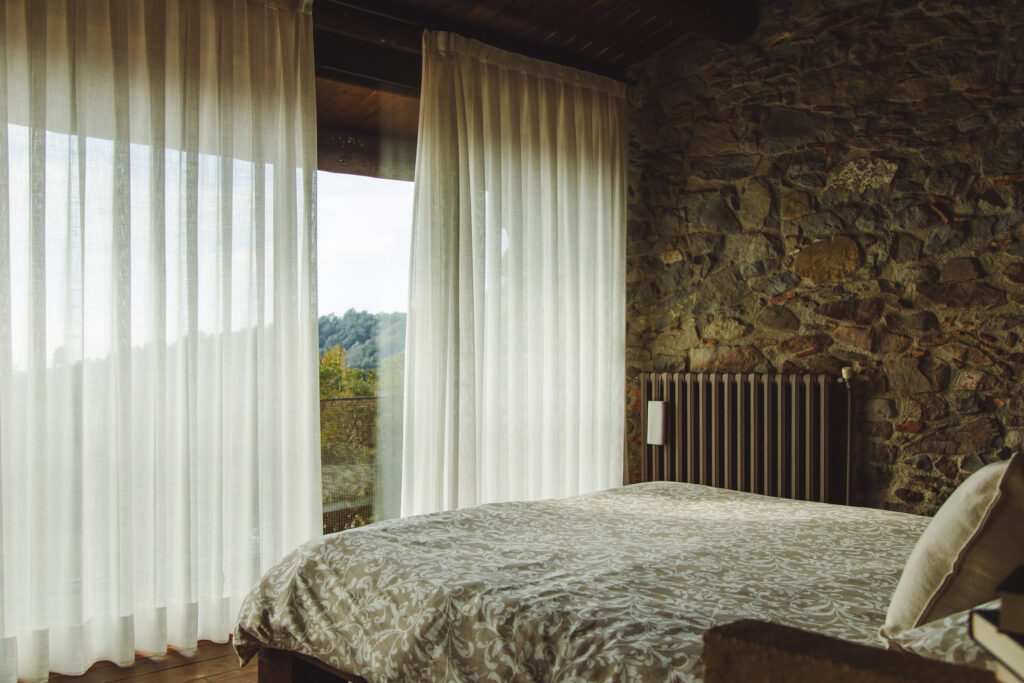
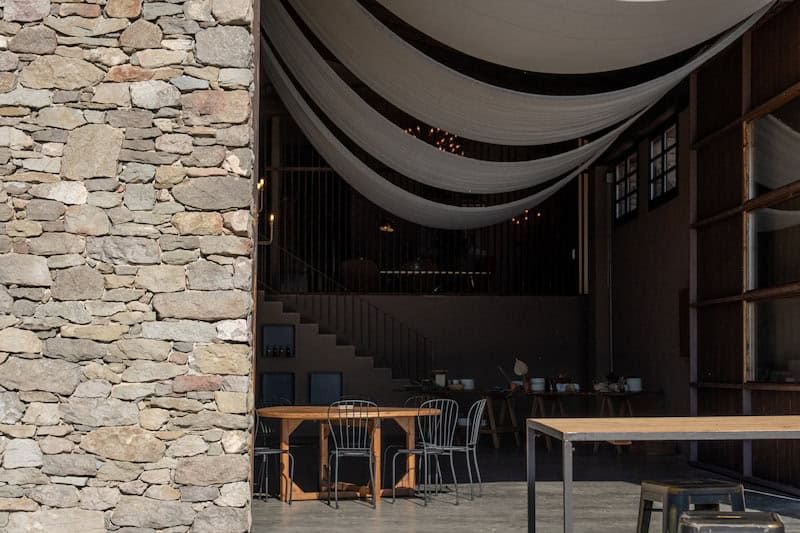
Venues like Mas Redortra, situated in a natural setting with on-site accommodation, allow couples to experience the civil ceremony as part of a broader and more relaxed experience.
When considering a venue, it’s important to analyze:
- Access: easy access and sufficient parking.
- Alternative plan: real indoor option in case of weather change.
- Distribution: smooth transition between event, cocktail hour and celebration.
- Time conditions: music limits and local regulations.
- Accommodation: possibility of avoiding travel and prolonging the meeting.
A good space is recognized when everything fits together without tension.

Design the script with balance and coherence
A well-designed civil ceremony doesn’t need excess. It needs coherence. Before adding elements, it’s wise to consider the tone you want to convey.
Some couples prefer a brief and formal ceremony; others seek greater emotional involvement. The script should be adapted to that objective.
You might consider incorporating:
- Personalized votes: they add depth when they are authentic and concise.
- Short readings: One or two well-chosen interventions are sufficient.
- Defined music: entry, ring exchange and exit set the rhythm.
- Symbolic ritual: only if it connects naturally with your story. Some couples incorporate simple gestures like the candle-lighting ceremony, where you light a candle together as a symbol of your union; the sand exchange, representing two paths merging; handfasting; or planting a tree as a metaphor for shared growth. It’s not about adding things just for the sake of adding them, but about choosing one that has real meaning and fits the tone of the ceremony.
The key is not to add more content, but to maintain structure and clarity.
Pay attention to the details that go unseen
The experience isn’t just about what’s visible. There are technical factors that directly influence how the moment is experienced.
A civil ceremony can look impeccable and yet be awkward if the sound fails or the timing isn’t right.
It’s advisable to plan ahead:
- General coordination: a responsible person who can handle unforeseen events.
- Preliminary technical test: check sound, microphones, and real-time.
- Alternative plan defined: clear decisions in case of adverse weather.
- Margin between moments: avoid abrupt transitions to the next act.
When these aspects are planned for, the event is experienced with greater serenity.
Final checklist for organizing the link
| Moment | What to close | What to prioritize |
| 10–12 months | Date and place | Define general format and style |
| 6–8 months | Officiant and structure | Clear script and balanced duration |
| 3–6 months | Music and interventions | Coherence and rhythm |
| 1–2 months | Technical logistics | Sound, weather and coordination |
| Last 2 weeks | Final confirmations | Delegate tasks and adjust schedules |
Turn the civil ceremony into a complete experience
Beyond the legal formalities, what many couples want is for the civil ceremony to feel not like an isolated formality, but as part of a cohesive experience.
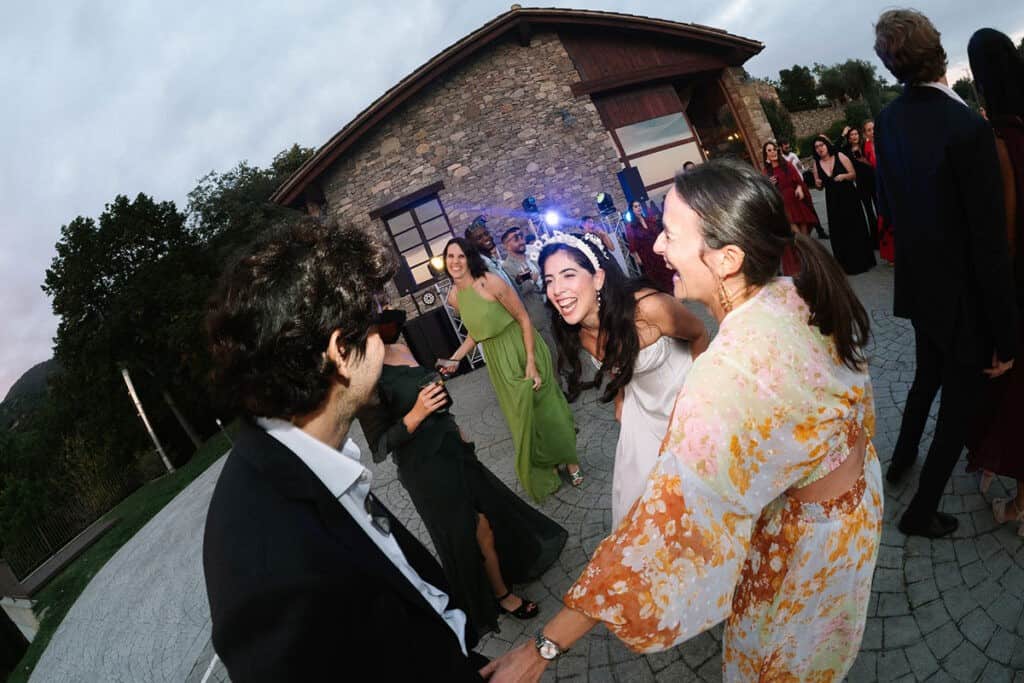
When held in a natural setting with accommodation options, as is the case at Mas Redortra, the ceremony becomes part of a shared weekend. The relaxed arrival, the time spent together beforehand, and the closing ceremony the following day transform the rhythm of the event.
Organizing a civil ceremony involves making clear decisions and creating a moment that, at the end, you feel truly represents you.
Organize your civil ceremony calmly in Mas Redortra
You might also be interested in…